


If you live somewhere with slow or unreliable internet — perhaps far from fiber-optic cables, or in an area where wiring is prohibitively expensive — you may soon have a new, dramatic option: high-speed internet beamed directly from space. That's the promise of Amazon Leo, the recently rebranded satellite internet initiative from Amazon. As of late 2025, Amazon is rolling out a new terminal, "Leo Ultra," capable of delivering up to 1 gigabit per second (Gbps) download speeds — a milestone for space-based internet.
A Brief Guide to Construction Jobs
Related searches
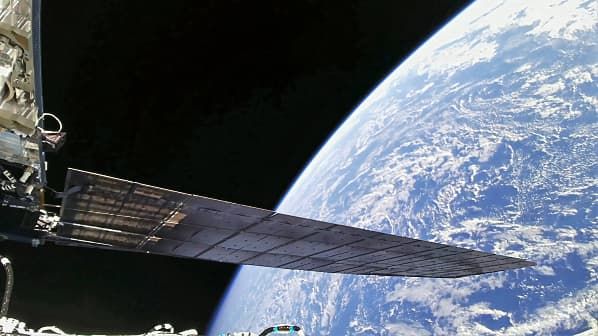
From Project Kuiper to Amazon Leo: What's Changing
It was originally named Project Kuiper when, years ago, the company first began outlining a global satellite broadband plan designed to offer reliable internet access “where traditional infrastructure is difficult or impractical.” In November 2025, Amazon renamed it Amazon Leo, referring to the low-Earth orbit (LEO) satellites powering the network.
Why the rebrand? Amazon says the new name better reflects the orbital architecture behind the system, and suggests the network is transitioning from its early experimental stages toward a fully realized, global broadband network.
But today, Amazon Leo isn't just a promise on paper: the company already operates more than 150 satellites in orbit, with many more planned as part of a constellation that — when complete — could include thousands of satellites.
The Technology Behind the 1 Gbps Claim
But leading the leap toward gigabit-grade performance at the heart of Amazon Leo is a new antenna: the "Leo Ultra". This isn't a bulky dish or prototype in any sense, but rather a full commercial-grade terminal that melds bleeding-edge engineering with real-world, practical usability. Amazon claims that the Ultra has a full-duplex phased-array antenna, which is also powered by its own custom silicon with proprietary radio-frequency design and signal-processing algorithms. This hardware allows downloads and uploads to be ensured at a high speed and the latency to be reduced.
Specifications? It is said that Leo Ultra provides 1 Gbps downlink rate and 400 Mbps uplink. The design is also rugged - weather-resistant, designed to meet the temperature extremes, precipitation, and strong winds. Amazon claims it is appropriate to use in the harsh conditions or remote places where the conventional wired infrastructure can simply not reach.
In addition to the Ultra, Amazon plans to support additional antenna models to address different requirements: a smaller “Leo Pro” (for up to 400 Mbps), and a compact “Leo Nano” designed for lighter-duty use cases, targeting up to 100 Mbps.
Who Stands to Benefit — And How This Could Change Connectivity
Amazon positions Leo as a solution for businesses, governments, and organizations in remote or underserved regions. Think mining operations in remote zones, vessels at sea, polar research outposts, isolated communities, rural regions without fiber — anywhere connectivity has been a luxury because of geography or cost.
Another interesting aspect: because Leo traffic can be backhauled through Amazon's own cloud infrastructure - the backbone of Amazon Web Services, or AWS - remote users may get not only raw connectivity but integrated access to cloud services and private networking, bypassing the public internet entirely. That could matter a lot for organizations handling sensitive data or relying on cloud resources in remote settings.
For individual users, once Amazon starts serving beyond its enterprise customers, Leo could mean stable broadband even in rural or hard-to-connect places — a fiber-like experience delivered from space. With the promised speeds, the service would support high-definition video streaming, video conferencing, online education, and modern cloud-based applications in places where such uses have been impracticable.
What This Could Mean - If Everything Works Out
If Amazon Leo lives up to expectations, we may be looking at a sea change in the way the internet reaches all corners of the globe. Places that have been passed over by rollouts of fiber-optic cable-remote rural areas, sparsely populated regions, ships at sea, field research camps-will gain access to gigabit-level internet. That opens possibilities for education, telemedicine, remote work, logistics, and cloud-enabled services even in places previously considered offline.
The addition of satellite connectivity to cloud infrastructure-mostly via AWS-might make Amazon Leo more than a last-resort broadband option; it could become a modern alternative to traditional ISPs for organizations and individuals in challenging environments.
< Prev

Next >

Guess you like






Trending
-
 1
1Six Hidden Features Transforming Your Opera Daily Browsing
-
 2
2Forza Horizon Six Welcomes Veteran Drivers With Elite Supercars
-
 3
3The Dawn Of DeepSeek V4: Reshaping The AI Landscape Against Industry Giants
-
 4
4Samsung Transforms OLED With Glasses Free Three Dimensional Technology
-
 5
5Unleashing Hidden Speed on Your Modern Sony Console
-
 6
6Canva Transforms Daily Workflows Through Seamless Connectivity