menu
search
How the iFixit FixBot Democratizes DIY Repairs

How the iFixit FixBot Democratizes DIY Repairs

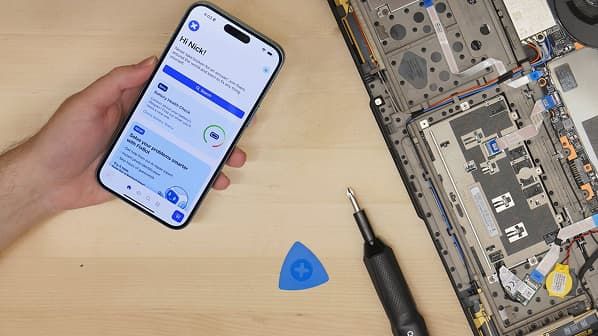
The backstory counts a lot. iFixit has built up detailed repair knowledge since the company was founded more than 20 years ago, with an unparalleled database now consisting of 125,000 repair guides that cover more than 72,000 different devices around the world. Smartphones, motorcycles, washing machines, lawnmowers, espresso machines-the breadth is truly staggering. When Kyle Wiens, CEO of iFixit, decided to create FixBot, he wasn't starting from square one at all. Rather, the company spent two years in the development of a sophisticated AI system that was only trained on this proprietary library, community forums and millions of pages of manufacturer manuals and technical specification sheets. Such narrow specificity is the exact difference between FixBot and generic AI chatbots such as ChatGPT or Gemini, which can easily give potentially dangerous advice on how to repair something to unsuspecting people all over the world, sounding plausible.

The user experience starts off innocently enough and is intuitively designed throughout. You describe your problem-your iPhone shuts off at 30 percent battery, your dishwasher won't drain, your vintage Volvo station wagon needs a tire change-and FixBot asks follow-up questions, systematically ruling out possibilities the way a master technician would think through problems deliberately and methodically. But here's where the tech gets genuinely clever: You can use voice commands to walk FixBot through your repair while your hands are actually dirty, elbow-deep in the device itself. You can even photograph the item in question and let computer vision identify the exact model and type of damage FixBot is looking at. The AI then pulls from iFixit's entire library, searching through obscure pages in manufacturer PDFs to surface exactly what you need. 

What really adds to this value is that FixBot is transparently sourcing and providing information based on references. The black-box AI systems leave you to guess what it is doing, but FixBot provides you with the schematics and documents it is using. In suggesting a replacement part, part numbers are cross-linked with your particular device model, greatly decreasing the chances of ordering something incompatible with your device model. It even helps you buy these parts directly via the app, verifying compatibility before the transaction is complete.

But FixBot intentionally has intelligent guardrails built in. It won't answer questions unrelated to repairs. Where iFixit lacks a particular guide to a particular device, such as with esoteric devices or highly specialized equipment, FixBot admits defeat and tries to assemble solutions by consulting manufacturer documentation, special web searches, and similar model guides. It is candid on limitations, playing the role of an informed friend but not a fallible authority 

Beyond FixBot, the app bundles in some other tools reflecting iFixit's holistic approach to device longevity. The battery lifespan predictor monitors your phone's battery health in real time, displaying degradation graphs of years of use patterns. That matters because Apple and Samsung keep their battery data very close to their chests-neither offers API access to third-party developers. To work around that limitation, iFixit uses activation dates and calculates current capacity against rated capacity specifications. While it admits this is still in beta and far from perfect, it's a more granular insight than you get through your phone's built-in battery menus.

The app features a detailed repair workbench in which users can track ongoing projects, so you never lose your place during complex multi-day repairs. Integration with iFixit's comprehensive parts inventory means verifying component availability before committing to expensive repair projects.

The pricing model tells quite something of iFixit's customer-first philosophy. For now, FixBot is free, but some features-voice support and document upload-will eventually live behind a paywall of $4.99 per month or $50 yearly for the "Enthusiast" tier. Until then, iFixit has given millions across the world access to a repair assistant that truly understands fixing things rather than permanently replacing them.


Read More Read More
Celebrating The Game Awards 2025's Most Striking Aesthetic Visions

Celebrating The Game Awards 2025's Most Striking Aesthetic Visions

One of the most surprising graphic overhauls occurred with Forest 3, which is a sequel to a series of survival horrors which were very dear to our hearts. While most series would have simply returned to their established setting of dense and dark forests, Forest 3 blows these expectations wide open with a survival game setting in a post-apocalyptic alien environment. The teaser trailer begins with a starship control room before a catastrophic explosion puts our hero hurtling towards a bleak, grey-blue planet not unlike those in Death Stranding. While the swamplands are present and ominous storming effects are in play, a sense of otherworldly dread not unlike Silent Hill is far removed from our survival horror series. Teamed with high-tech elements such as a cyborg-powered arm strapped to our shoulder, this neon-drenched future sensibility not only clashes inexplicably with series tradition but somehow succeeds in being a perfect fit for our survival game experience from an intergalactic perspective.

At the other extreme of the emotional spectrum, Out of Words is warmly embraced with hand crafted full stop-motion animation. The development team has worked to sculpt, animate, and shoot every character, environment, and object so that they are tactile to touch, which is rare in games. Players are left with Kurt and Karla, two voiceless children in a colorful and whimsical world called Vokabulantis, where they work to complete physics puzzles in a city of clay architecture.

Control Resonant enters surrealist realms with a paranormal vision of Manhattan. Remedy Entertainment has crafted a "perception-bending playground," where reality goes sour. The sequel contains kaleidoscope pigeons, twisted architecture, and paranormal creatures operating in a distorted cityscape. Instead of the controlled industrial environment in this game, Manhattan now expands into a city where each corner potentially unravels in upon itself in impossible ways. The aesthetic language focuses on mindscrewed rather than conventional environmental storytelling in a cityscape of Manhattan turned into a canvas nightmare.

Divinity: dark fantasy vision of shock through brutal contrast. The cutscene unveiling Divinity, by Larian Studios, starts with a festival in full swing: bright colors, upbeat music, dancing civilians, before shifting to a man destined for ritualistic sacrifice. The tempo of editing intercutting festival fun with prep for death creates a sense of dissonance in the viewer's mind. The climactic body horror scene, when the corpse of the victim turns to a demonic figure during geysers of blood, is shaped like an ugly flesh obelisk. This order focuses more on visceral effect and supernatural grotesqueness with a suggestion of a more darker tone than Baldur Gate 3 though time will tell whether the aesthetic is prevalent throughout the entire game.

"Tomb Raider Catalyst" brings the series into the fragmented environments of Northern India with ancient sites pushed up to the surface by a catastrophic event. The environment in this trailer focuses on destruction and precarious platforming over unstable surfaces. Lara's investigation into decayed architecture and mythical environments brings this series into a realm of real-world archaeology with the tight escapes Tomb Raider is known for. Such an environment brings a different kind of culture and distinct environments not presented in previous Tomb Raider games.

Star Wars: Galactic Racer conveys speed and scenery with a focus on speeder racing in a very efficient manner. Speed and pretty scenery from a standard Star Wars setting are highlighted in a trailer with an attention to detail in lighting effects to provide a fast-paced racing experience with a proper sense of Star Wars standards.

Collectively, these announcements prove that gaming’s aesthetic is not limited to every conceivable artistic style. Whether it be practical stop-motion art, digital surreal horror, or grotesque bodily horror, game developers are continually pushing the definition of beauty and achievement beyond conventional parameters. The Game Awards in 2025 proved that visual excellence can include far more than optimized graph specifications, including aesthetic vision, message, and a willingness to truly be different.

Read More Read More
Trading Up to iPhone 17 Pro Left Me Wondering Why I Waited So Long

Trading Up to iPhone 17 Pro Left Me Wondering Why I Waited So Long

The Vapor Chamber Game-Changer: Real Relief from Thermal Throttling

The most immediate difference hit me during extended photo sessions outdoors. My iPhone 15 Pro would throttle performance when shooting video in direct sunlight or running intensive apps, but the iPhone 17 Pro's vapor chamber cooling system transformed everything entirely. This advanced thermal management system enables sustained performance that simply didn't exist before. Apple boasts of up to 40 percent sustained performance, and in reality, 4K video at 120 frames per second does not make the phone choke. Recording in demanding formats like ProRes RAW with Apple Log 2 now feels effortless, whereas my older phone required strategic waiting periods between intensive creative work sessions.

Universal 48MP Cameras: Uniformity of all Lenses

The iPhone 15 Pro was an incoherent ecosystem with its ultrawide and 3x telephoto lens, but the iPhone 17 Pro has unified the whole camera system to 48MP in all three lenses. This breakthrough is important as the ultra-wide shots are matched finally in terms of detail and clarity of the main camera. The telephoto was also the one that was most dramatically updated, as it has an increase in 12MP and 3x zoom to 48MP and the ability to use the 4x and 8x optical zoom. With distant subjects the enhancement is realized at once in sharpness and accuracy of colour. The extended plateau design that stretches the camera housing side-to-side houses genuinely different technology, not merely an aesthetic refresh.

Display Brightness That Actually Transforms Daily Use

The difference between the 2,000 nits brightness in the iPhone 15 Pro and 3,000 nits in the iPhone 17 Pro seems like a small difference until one tries it himself/herself. Outdoor visibility improved dramatically. I confidently checked messages and captured photos in direct sunlight without screen washout. The minimum brightness of 1 nit proved surprisingly practical—reading at night without waking my partner became possible because I could dim the screen far lower than before. Apple's new M14 display material combined with improved factory color calibration means everything looks more vivid yet natural.

Battery Life and Charging That Respect Your Time

Two significant improvements compound here. This enlarged battery coupled with the more efficient A19 Pro processor will increase the video playback time of the iPhone 15 Pro (23 hours) to 27 hours of iPhone 17 Pro. However, charging speed should also be given equal consideration- 50 percent charge within 20 minutes as compared to 30 minutes is significant time savings. At 25W wireless charging capability, my morning routine fundamentally changed. I eliminated the pre-dawn cable scramble. This small shift, combined with extended battery life, meant I finally stopped carrying a portable battery daily.

The 18MP Center Stage Front Camera Transformed Video Calls

The upgrade from 12MP to 18MP on the front camera seemed purely quantitative until I started making video calls regularly. Center Stage now tracks multiple people more intelligently, automatically panning to keep everyone centered during conversations. For creators recording dual-angle content, the new Dual Capture feature opens possibilities that simply didn't exist before. My Zoom calls look sharper and more professional. My partner noticed the quality improvement immediately during our first video call together.

Final Thought

The unibody material used to make the phone is indeed harder to handle than the titanium frame of my iPhone 15 Pro, which dents and scratches much more readily, but the net gains in everyday experience make this trade-off insignificant. The two-year incremental optimization of thermal management, camera standardization, display quality, battery efficiency, and front-facing video capabilities have made something truly transformative. This wasn't a marginal iteration but a meaningful leap forward in what a smartphone can accomplish.

Read More Read More

Categories

Featured Articles

  • Why Chatbots Make Things Up Now and Then and What That Portends for Us

    Why Chatbots Make Things Up Now and Then and What That Portends for Us

    Al

    In recent years, artificially intelligent (AI) chatbots have been becoming progressively smarter and smarter, transforming mundane interactions in everything from customer support and learning to even fiction writing. But despite the alarmingly natural-sounding fluidity and apparent intelligence of these systems, they are notorious for spouting out what experts like to call “AI hallucinations”: confidently generated statements or facts that are completely false or fabricated. But what are AI hallucinations, why do chatbots fabricate, and what does every user need to learn to use this new digital front safely and effectively?

  • How to Master Your Mac’s Multi-Monitor Experience

    How to Master Your Mac’s Multi-Monitor Experience

    Technology

    For the majority of Mac users, a single screen simply isn't sufficient. Designers require layouts side by side, developers like several windows, and professionals are opening spreadsheets while participating in video calls. The addition of extra monitors has the potential to have a huge improve on productivity, however the configuration process under macOS is not always straight forward and can be a plug and pray. Yet it is just a matter of having the correct approach to get a multi-monitor environment that feels natural and efficient.

  • Why “Are You Dead?” Topped China's Paid App Charts

    Why “Are You Dead?” Topped China's Paid App Charts

    Software

    Early in 2026, a rather ordinary utility app bearing an attention-grabbing moniker reached the top ranks of sold applications in the iPhone App Store of China: Are You Dead? or, in Chinese, Sǐ le ma. The app only briefly turned out to be China's top-selling application, having easily elbowed aside the popular commercial productivity application lineup and video games. Its meteoric rise was not cheered by vigorous marketing or celebrity endorsement, but by pure word of mouth and social media talk. The app was downloaded by many simply out of curiosity through the existence of such a provocative name, only to discover that behind that even more provocative name was a very simple idea targeted toward the increasingly social reality in China.

  • Arcade Hits That Found Bigger Crowds Beyond America

    Arcade Hits That Found Bigger Crowds Beyond America

    Game

    The arcade games which captured American audiences the most during their initial release did better in international venues than they did in their home country. The history of arcades depends on American history through its examination of American arcade venues which include malls and pizza parlors and early coin-op booms. American venues failed to support certain arcade games which became popular due to their combination of high player attendance and lower operating costs. The games achieved international success as their strongest fan bases developed outside of the United States.

  • Gaming Laptops vs. Desktop PCs: Which Is Truly Best for Gaming?

    Gaming Laptops vs. Desktop PCs: Which Is Truly Best for Gaming?

    Game

    The gaming sector features an eternal choice between desktop PCs and gaming laptops that connects performance capabilities with portable features and cost elements and system flexibility. Both platforms have changed dramatically, yet their inherent differences continue to make one more ideal than the other based on the gamer’s preferences.

  • Goblin Sushi: A Roguelike Cooking Sim Where Goblins Master Sushi Craft

    Goblin Sushi: A Roguelike Cooking Sim Where Goblins Master Sushi Craft

    Game

    Goblin Sushi is an up-and-coming videogame that breaks all standard rules of cooking simulation by not letting a player be a part of a normal human world, but instead acts as a determined goblin chef intent on making sushi in some dark subconscious world. The game is to be out in Early Access on February 9, 2026, developed by independent studio Old Cake Factory. The title combines fast-paced restaurant management and roguelike progression mechanics in a fashion that is simultaneously chaotic and incredibly ridiculous.

  • Nintendo Switch 2 vs Switch 1: A Leap Forward in Handheld Gaming

    Nintendo Switch 2 vs Switch 1: A Leap Forward in Handheld Gaming

    Game

    Nintendo’s latest console, Nintendo Switch 2, is a radical upgrade to its predecessor, the initial Switch released way back in 2017, which revolutionized gaming with its hybrid design factor. While the new console retains the highly popular concept of a home console that doubles up as a handheld console, it introduces a whole host of major upgrades and innovations into the game-playing experience that move it to a whole new level.

  • The Definitive Guide to Apple Intelligence Revolution

    The Definitive Guide to Apple Intelligence Revolution

    Al

    Since its official launch in 2024 and subsequent expansion in 2025, Apple Intelligence has been at the forefront as the foundation of Apple’s overall artificial intelligence structure, redefining the way users can engage their iPhones, iPads, Macs, Apple Watches, and Vision Pros. More than simply a “assistant” tool, Apple Intelligence is Apple’s attempt at providing a more private and personal way at a deep level with generative AI.