


For ten whole years, iFixit had been absent from the app stores; banned, after Apple pulled its developer account back in 2015 due to a controversial iPad teardown. But on December 9, 2025, the legendary repair resource finally made its triumphant return—and this time, it's not just bringing back the guides. The new iFixit app introduces FixBot, an AI repair assistant that transforms the intimidating world of device repair into something approachable, even for those who have never opened a gadget in their lives.
A Brief Guide to Construction Jobs
Related searches
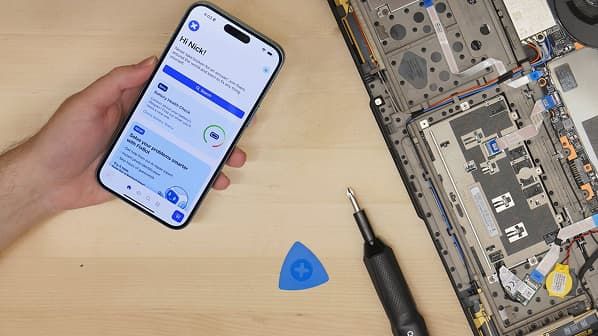
The backstory counts a lot. iFixit has built up detailed repair knowledge since the company was founded more than 20 years ago, with an unparalleled database now consisting of 125,000 repair guides that cover more than 72,000 different devices around the world. Smartphones, motorcycles, washing machines, lawnmowers, espresso machines-the breadth is truly staggering. When Kyle Wiens, CEO of iFixit, decided to create FixBot, he wasn't starting from square one at all. Rather, the company spent two years in the development of a sophisticated AI system that was only trained on this proprietary library, community forums and millions of pages of manufacturer manuals and technical specification sheets. Such narrow specificity is the exact difference between FixBot and generic AI chatbots such as ChatGPT or Gemini, which can easily give potentially dangerous advice on how to repair something to unsuspecting people all over the world, sounding plausible.
The user experience starts off innocently enough and is intuitively designed throughout. You describe your problem-your iPhone shuts off at 30 percent battery, your dishwasher won't drain, your vintage Volvo station wagon needs a tire change-and FixBot asks follow-up questions, systematically ruling out possibilities the way a master technician would think through problems deliberately and methodically. But here's where the tech gets genuinely clever: You can use voice commands to walk FixBot through your repair while your hands are actually dirty, elbow-deep in the device itself. You can even photograph the item in question and let computer vision identify the exact model and type of damage FixBot is looking at. The AI then pulls from iFixit's entire library, searching through obscure pages in manufacturer PDFs to surface exactly what you need.
What really adds to this value is that FixBot is transparently sourcing and providing information based on references. The black-box AI systems leave you to guess what it is doing, but FixBot provides you with the schematics and documents it is using. In suggesting a replacement part, part numbers are cross-linked with your particular device model, greatly decreasing the chances of ordering something incompatible with your device model. It even helps you buy these parts directly via the app, verifying compatibility before the transaction is complete.
But FixBot intentionally has intelligent guardrails built in. It won't answer questions unrelated to repairs. Where iFixit lacks a particular guide to a particular device, such as with esoteric devices or highly specialized equipment, FixBot admits defeat and tries to assemble solutions by consulting manufacturer documentation, special web searches, and similar model guides. It is candid on limitations, playing the role of an informed friend but not a fallible authority
Beyond FixBot, the app bundles in some other tools reflecting iFixit's holistic approach to device longevity. The battery lifespan predictor monitors your phone's battery health in real time, displaying degradation graphs of years of use patterns. That matters because Apple and Samsung keep their battery data very close to their chests-neither offers API access to third-party developers. To work around that limitation, iFixit uses activation dates and calculates current capacity against rated capacity specifications. While it admits this is still in beta and far from perfect, it's a more granular insight than you get through your phone's built-in battery menus.
The app features a detailed repair workbench in which users can track ongoing projects, so you never lose your place during complex multi-day repairs. Integration with iFixit's comprehensive parts inventory means verifying component availability before committing to expensive repair projects.
The pricing model tells quite something of iFixit's customer-first philosophy. For now, FixBot is free, but some features-voice support and document upload-will eventually live behind a paywall of $4.99 per month or $50 yearly for the "Enthusiast" tier. Until then, iFixit has given millions across the world access to a repair assistant that truly understands fixing things rather than permanently replacing them.
< Prev

Next >

Guess you like
-

How Amazon Leo Could Bring 1 Gbps Internet from Space
-

How Long Do Car Wraps Last and How to Look After Them
-

Google Photos Turns Users into Meme Stars with New “Me Meme” Feature
-

What to Know Before Letting ChatGPT Write Your Cover Letter
-

Forza Horizon Six Welcomes Veteran Drivers With Elite Supercars
-
Creating Your Ideal iPhone Emoji Using Apple’s Genmoji
Trending
-
 1
1Six Hidden Features Transforming Your Opera Daily Browsing
-
2
Forza Horizon Six Welcomes Veteran Drivers With Elite Supercars
-
 3
3The Dawn Of DeepSeek V4: Reshaping The AI Landscape Against Industry Giants
-
 4
4Samsung Transforms OLED With Glasses Free Three Dimensional Technology
-
 5
5Unleashing Hidden Speed on Your Modern Sony Console
-
 6
6Canva Transforms Daily Workflows Through Seamless Connectivity