


This has been made possible by modern vehicles that utilize warning lights to break down complicated mechanical systems to simple visual interpretations by the driver. The most misinterpreted of them are the “Maintenance Required” and “Check Engine”. They are confused by many drivers as similar alerts with the meaning that something is wrong, however, they are diverse in purpose, functioning, urgency, and risk. Knowledge of the difference is not only the technical knowledge, but it has a direct influence on the engine life, costs of repair, and safety on the road.
A Brief Guide to Construction Jobs
Related searches
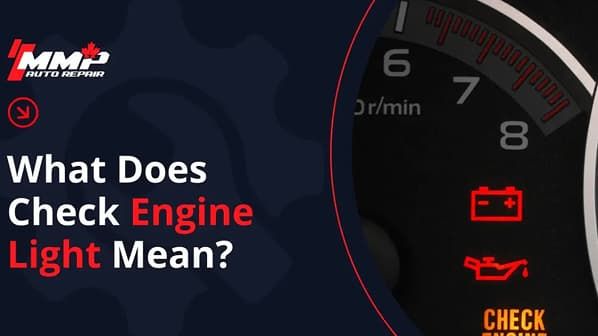
What “Maintenance Required” Actually Means
The “Maintenance Required” light is not a fault warning. It is a service reminder depending on mileage or hours intervals that are fixed by the manufacturer. The system does not function under mechanical sensors but a programmed counter. When the car has traveled a certain distance or has passed a certain time limit, which in most cases is related to the oil change, schedule of fluid services and period of vehicle inspections, the light automatically switches on.
The thing is that this alert does not signify anything is broken. Rather, it is an indication that normal preventive checkups are needed. They usually contain oil and filter changes, tire rotations, brakes checkups, fluid, air filter and general system checks. Once the service has been done, the reminder has to be reset manually.
It is meant to protect in the long run. Engine oil is affected chemically as time goes by becoming viscous and losing lubrication quality. The brake fluid is wet and therefore less effective in braking. Coolant is deprived of corrosion inhibitors. The disregard of this light does not result in an instant failure, however, the wear, heat accumulation, and inner friction can be faster and the environment is created that will ultimately result in actual mechanical problems.
What the “Check Engine” Light Represents
The malfunction indicator lamp (MIL), which is also known as the “Check Engine”, is a component of the onboard diagnostics system of the car. It is activated by sensor, rather than time, data. There are various sensors on the engine and the emissions system, including oxygen sensors, mass airflow sensors, crankshaft position sensors, ignition coils, fuel injectors and catalytic converters which relay continuous data to engine control unit (ECU).
In case ECU recognizes that the values fall outside of the programmed tolerances, it records a fault code and turns on the light. This implies that a system is already working contrary to the norms. Reasons include simple fluke problems such as a loose gas cap leading to leaks of evaporative emissions, and severe problems such as misfires, failure to deliver fuel, air-fuel ratio problems, or catalytic converter damage.
Severity also matters. A steady “Check Engine” light usually indicates a non-immediate but real problem. A flashing light signals active misfires or severe faults that can rapidly damage the engine and exhaust system, requiring immediate shutdown.
Preventive Signal vs Diagnostic Warning
The core difference lies in function. “Maintenance Required” is preventive. It exists to stop problems before they start. It does not measure engine health or performance. It only tracks time and usage.
“Check Engine” is diagnostic. It means a fault already exists. Something is malfunctioning, misfiring, leaking, misreading, or failing. It is not a reminder—it is a system alert based on real-time data.
Risk and Urgency Profiles
The risks are not equal. Ignoring “Maintenance Required” increases long-term degradation: sludge buildup, overheating, premature seal failure, and reduced component lifespan. These are slow, cumulative failures.
Ignoring a “Check Engine” light can cause rapid damage. Unresolved misfires destroy catalytic converters. Fuel system faults damage pumps and injectors. Emissions failures prevent inspection approval in regulated regions. What starts as a small sensor issue can escalate into a major repair.
Correct Driver Response
A “Maintenance Required” light means schedule routine service. It is about discipline and prevention, not emergency action.
A “Check Engine” light means diagnostics. The vehicle should be scanned for fault codes, even if it seems to drive normally. Action should be data-driven, not assumption-based.
The Defining Principle
“Maintenance Required” is about time and mileage. “Check Engine” is about malfunction and abnormal operation. One protects the future. The other signals a problem in the present. Knowing the difference turns dashboard lights into meaningful information—and that knowledge protects both your vehicle and your finances.
< Prev

Next >

Guess you like
-

Smart Bulbs vs. Standard LEDs: A Detailed Energy Consumption Comparison
-

The Best Bargains and Least Fuel-Guzzling Auto Choices in 2025
-

Real Ways to Fix Your Cell Signal When Your Phone Bars Disappear
-

Six Hidden Features Transforming Your Opera Daily Browsing
-

Switch 2 Accessories Redefining Nintendo’s New Console
-

Electric Trucks Falter in the U.S. — The High-Stakes Struggle Behind the Wheels
Trending
-
1
Six Hidden Features Transforming Your Opera Daily Browsing
-
 2
2Forza Horizon Six Welcomes Veteran Drivers With Elite Supercars
-
 3
3The Dawn Of DeepSeek V4: Reshaping The AI Landscape Against Industry Giants
-
 4
4Samsung Transforms OLED With Glasses Free Three Dimensional Technology
-
 5
5Unleashing Hidden Speed on Your Modern Sony Console
-
 6
6Canva Transforms Daily Workflows Through Seamless Connectivity